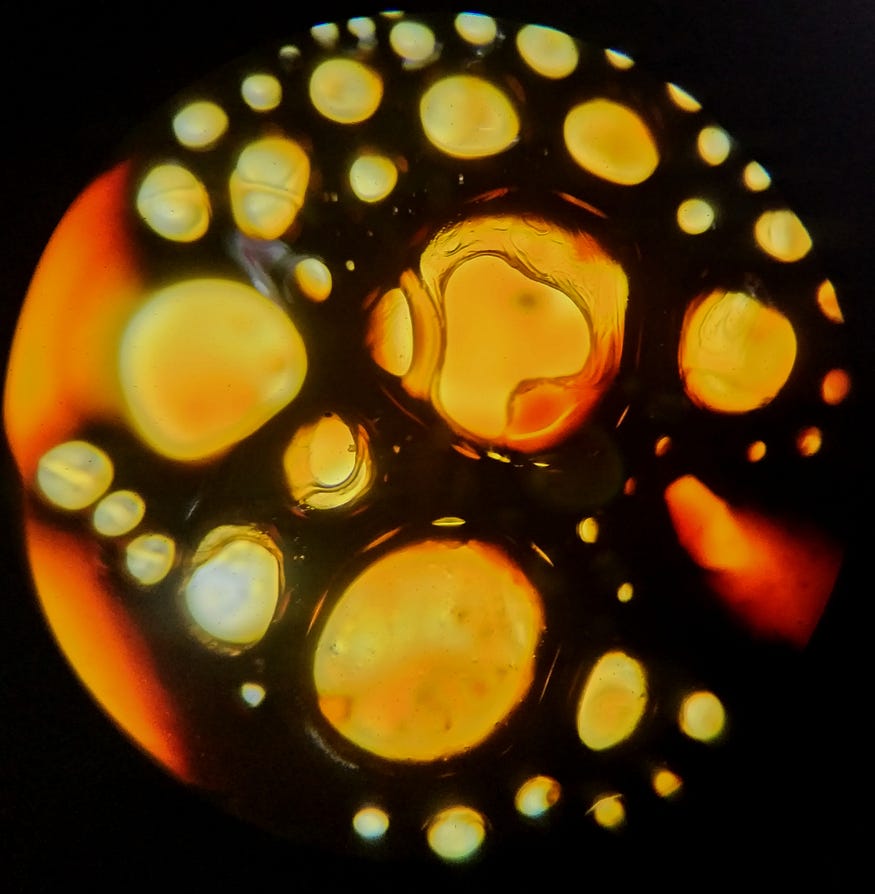
Burnt Honey is Blazingly Marvelous under the Microscope
Last week, I had one of the most wonderful and memorable microscopy sessions of my life where nothing went to plan, but everything turned out great in the end. I’ve told one part of that story already. This is part two, and it’s as sweet as the first.
This story is about honey.
Taking inspiration from a Discord friend, I tried making crystals of honey. The regular procedure is to dissolve honey in water and allow it to slowly evaporate and crystallize. I didn’t want to wait, so I placed a drop of honey on a microscope slide and held it directly over a flame, hoping for the best.
The process went swimmingly, except that the honey literally combusted on the microscope slide when it got too hot. (Should’ve expected that; my bad!)
The resulting flame spurted and bellowed and morphed into a plethora of exotic colors until all the sweet fuel was finally spent, and the wispy fire went out, leaving behind it a thick black plaque of burnt honey.
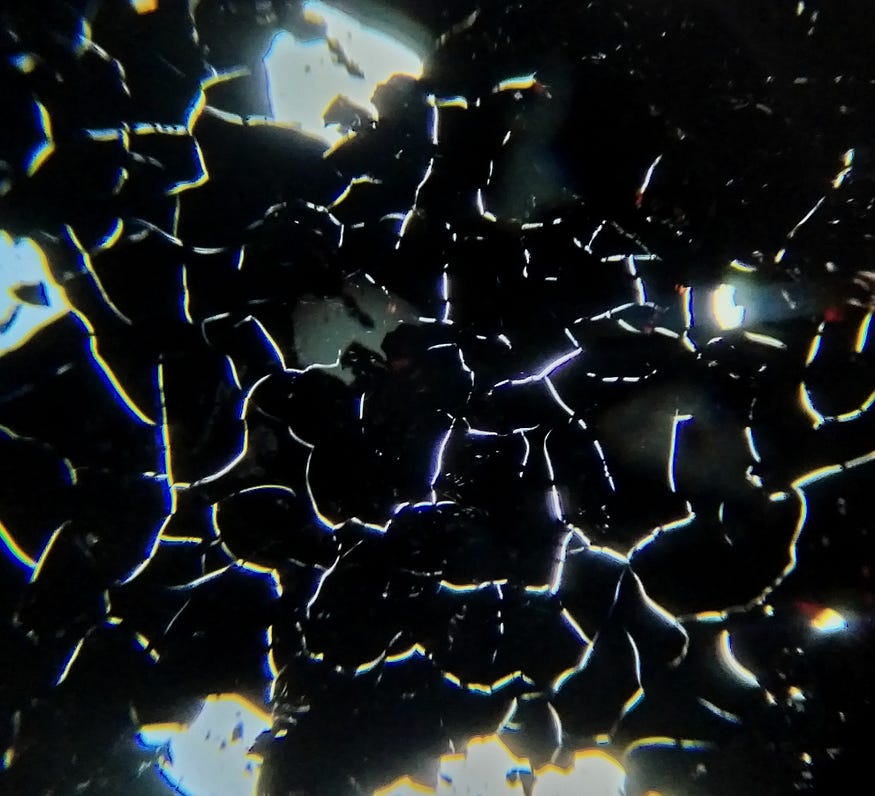
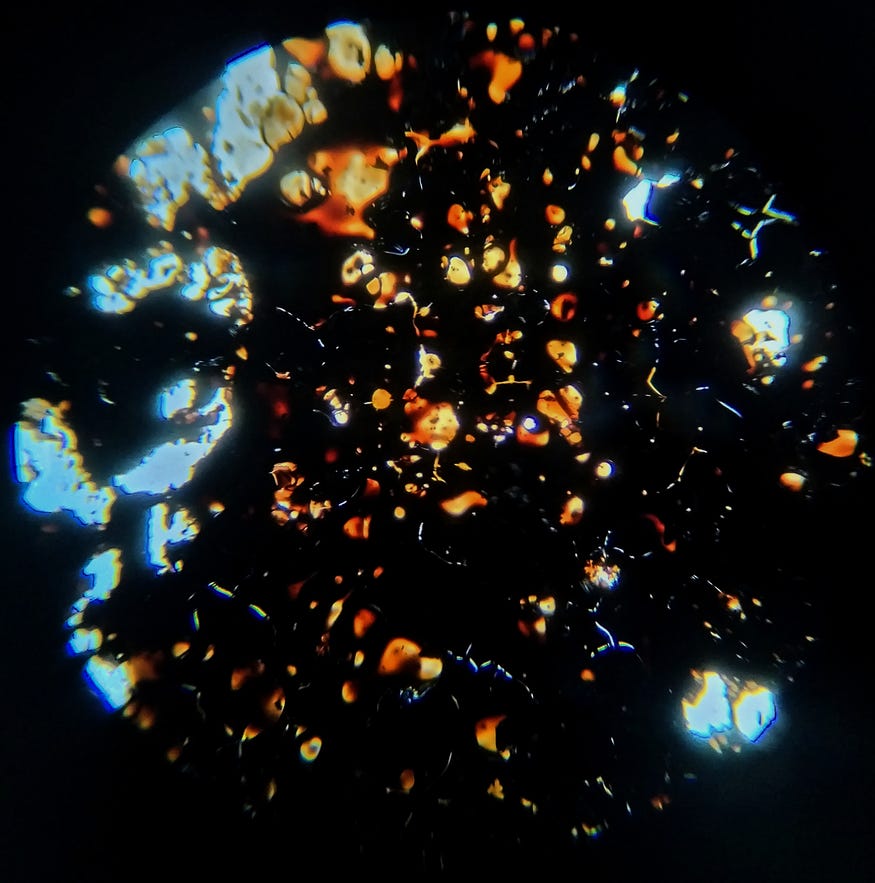
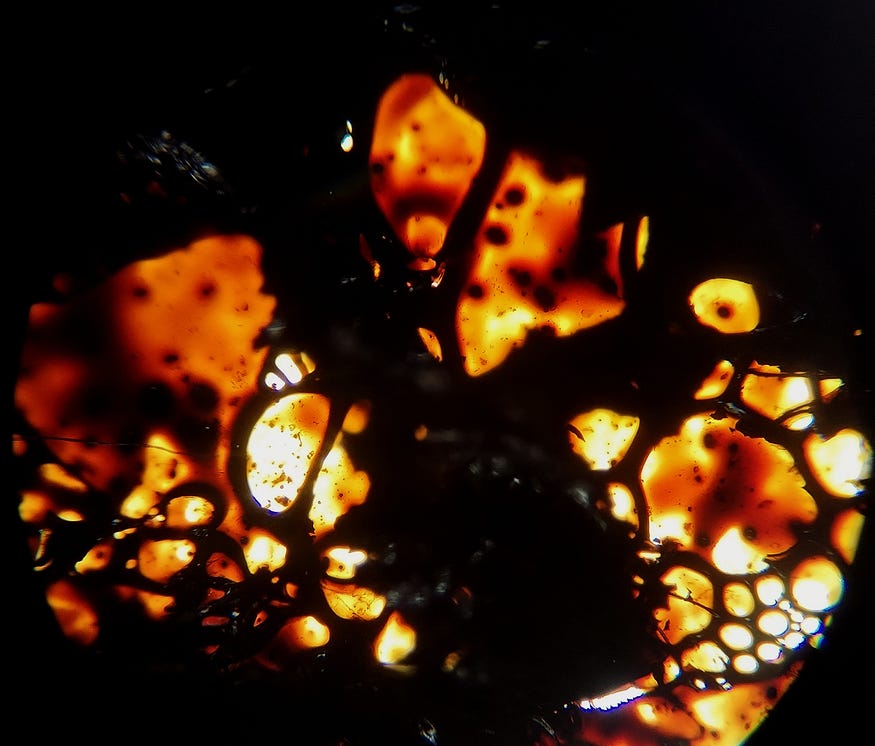
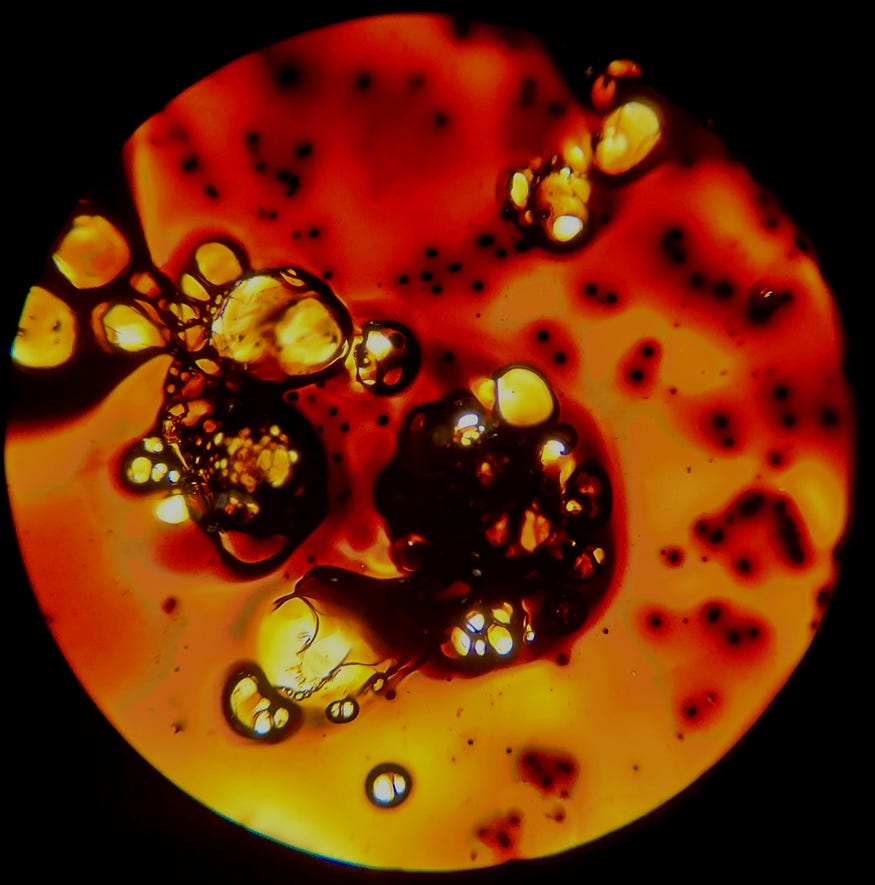
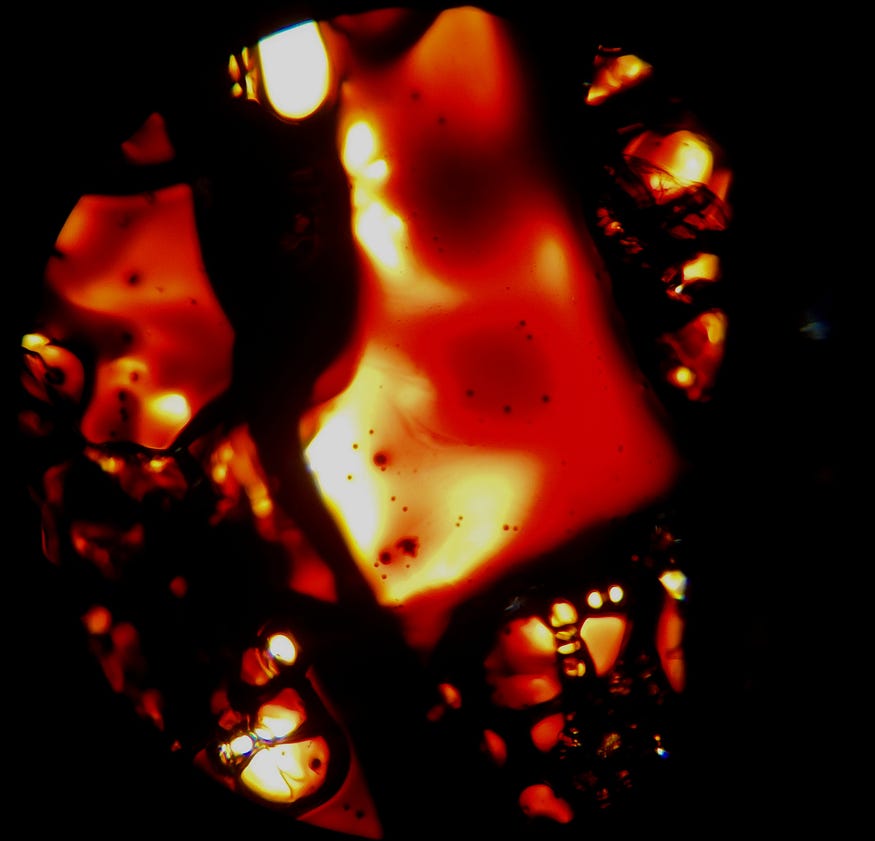
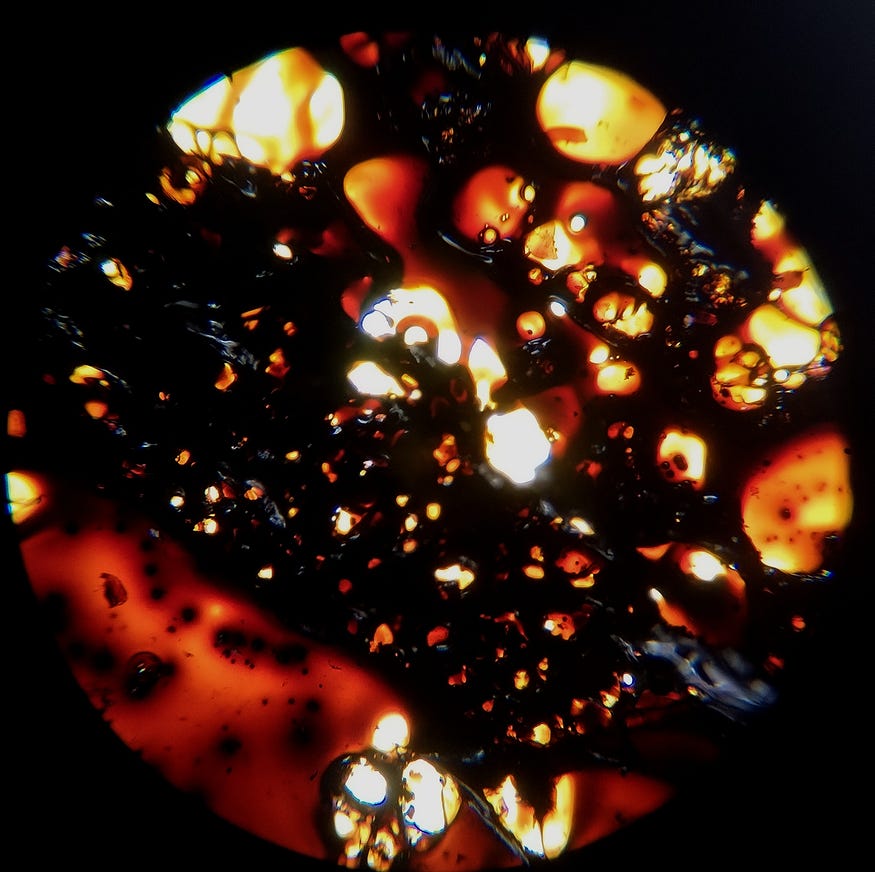
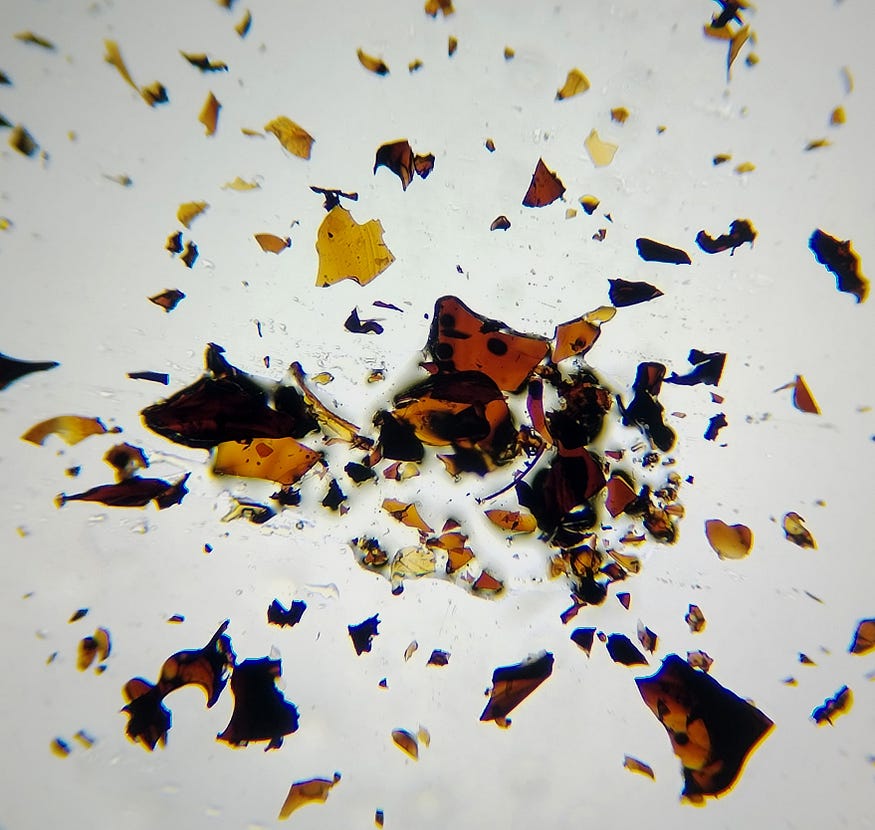
The plaque looked great under the microscope with white light filtering through its cracks. Then I grinded out the top part to take a look inside, and it was epic.
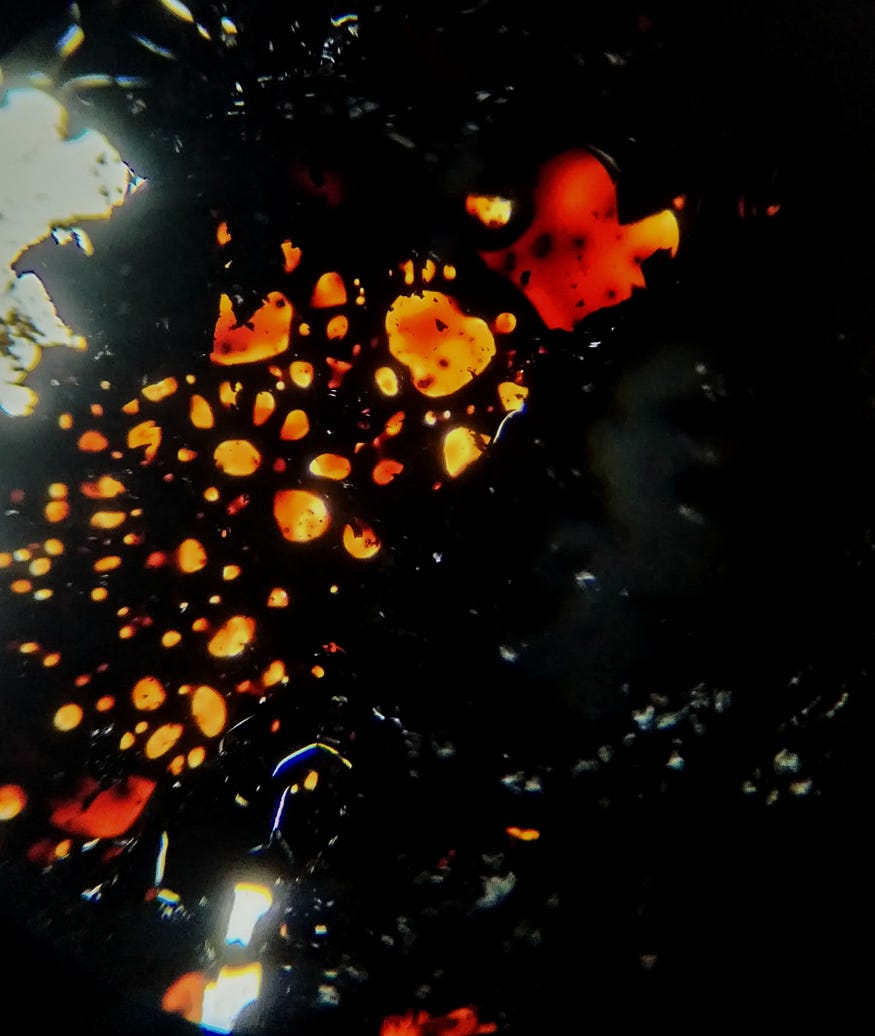
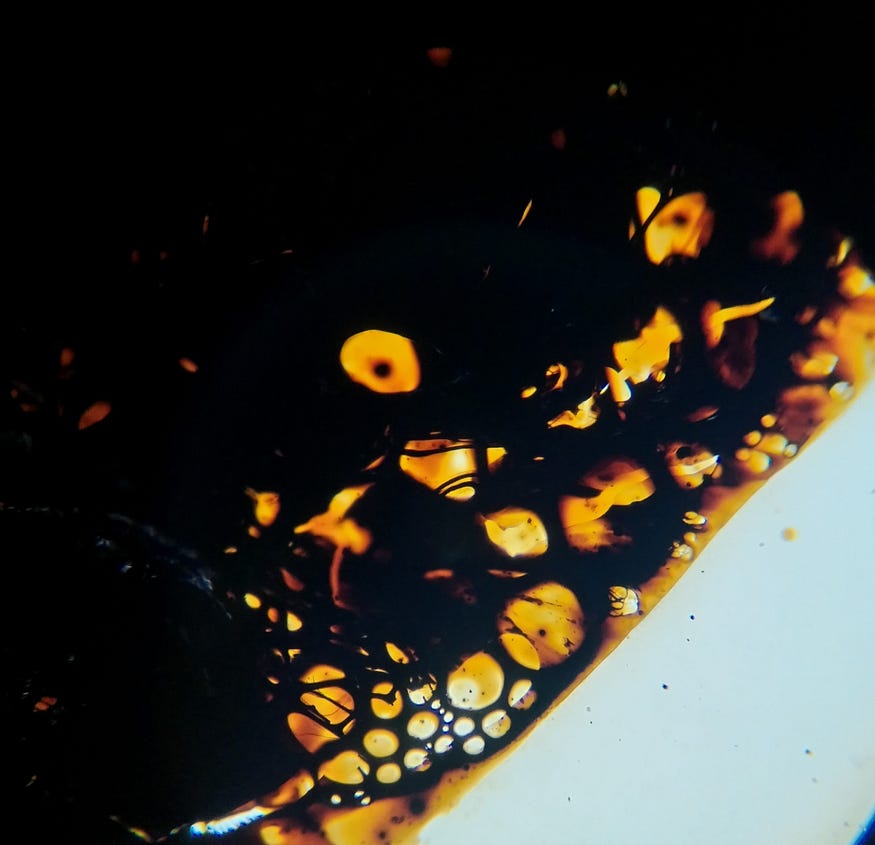
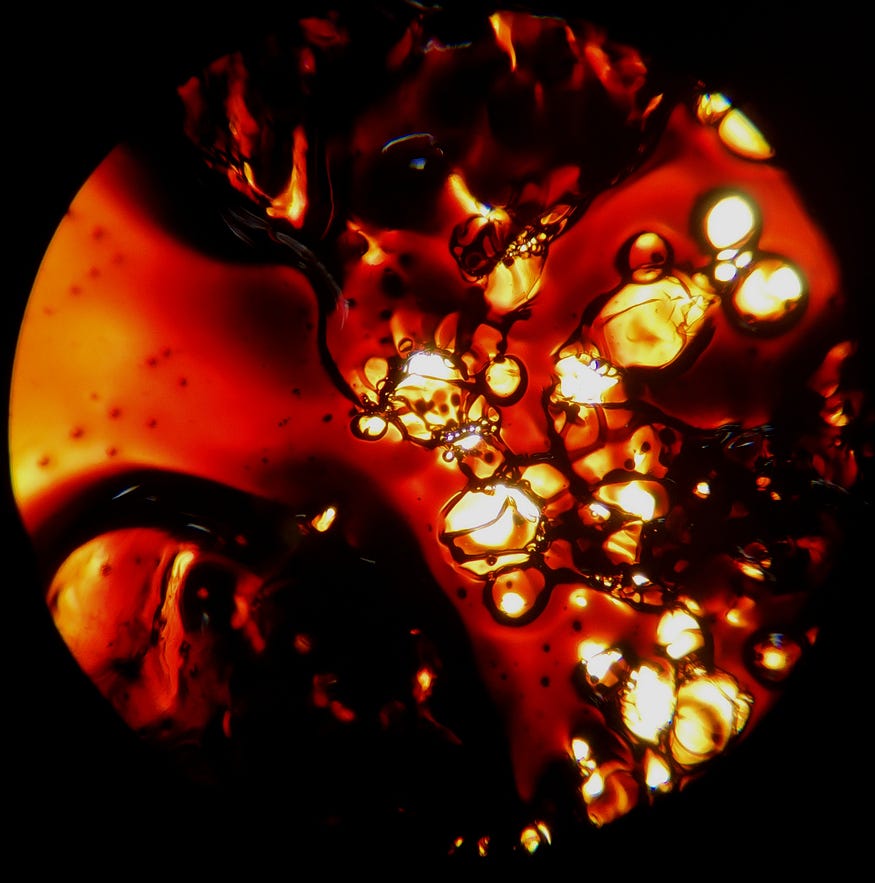
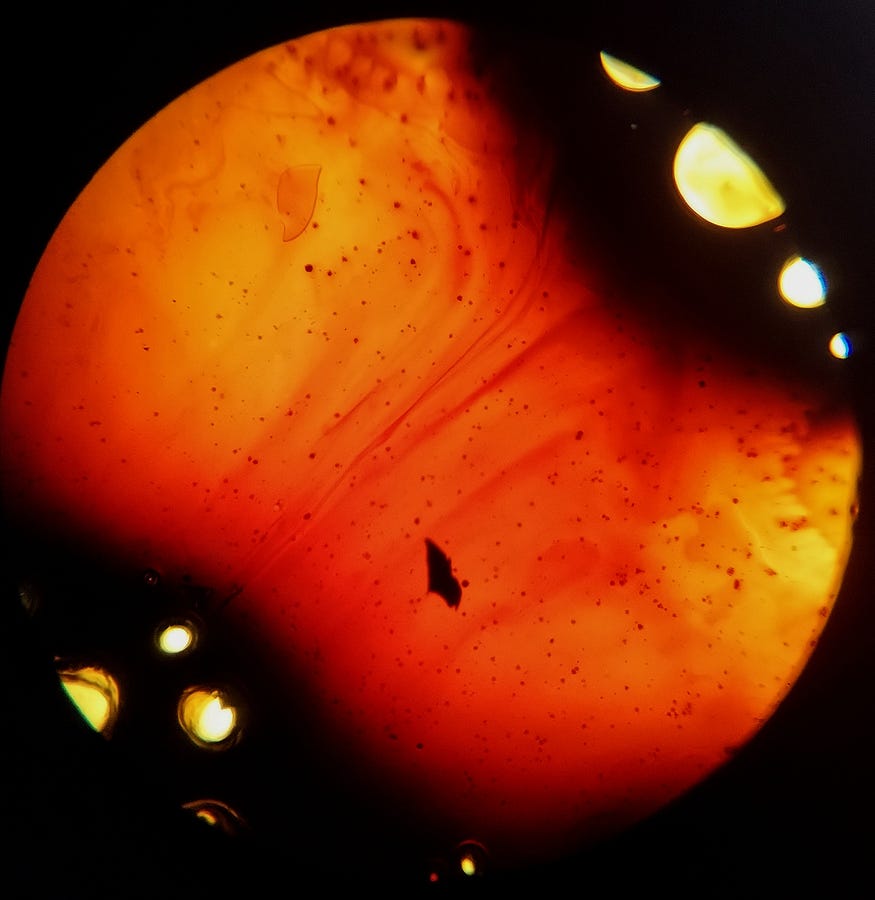
Today, I have for you burnt honey that looks like lava.
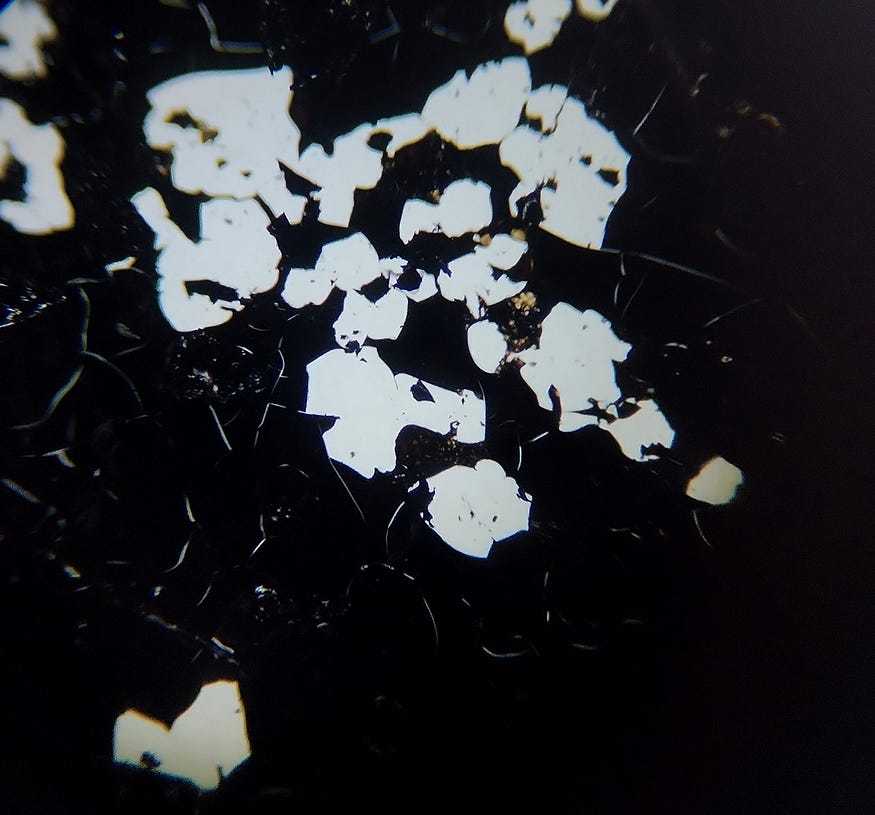
Light filtering through the burnt plaque.Look at the contrast between the blacks and the whites, the straight and semi-geometric nature of the holes, the whiteness beyond.First hints of color. The orange spots are unburnt honey. Slightly caramelized, and richer than normal.Doesn’t it look like lava bubbling out of black igneous rocks? Don’t the holes look like magma pockets?Notice how the black brings out the orange. How the honey still possesses a fluid-like quality even in a still image. Look especially at the textures and hues of the orange.What a wonderful combination of bright white light and bright orange honey. A partnership that amplifies both their appeal. The black soot masks the color and hides the light, and in doing so, makes all the more vivid and striking.A sea of fluid honey-lava. Notice it diffusing and bubbling outwards, the hues, the color-gradient, the black mask that gives it character.Notice the tiny impurities suspended in the honey, like tiny rocks the lava fails to swallow. Notice the brightness, the sense of warmth it exudes, the bright spots, and the dark ones.Richer, darker, and more fluid. The orange bubbles are bright enough to hurt. As if it’s violent and boiling. The fluid-dynamics at play is eye-wateringly beautiful.A tuft of (what looks like) hair, tucked to one corner. It’s a part of the honey, but I’ve no idea how it got there.Fluid, colorful, wonderful. Look deeply at the swirls of the orange, the streaks, the spots. The light filtering through both sides, bright yellow bubbles on the top and bottom, the shadows, the winged debris in the middle. It looks like a bat, and I can’t be convinced otherwise.Turbulent. Notice how the black spots are surrounded by a darker orange and the bulbous nature of the structures in the middle.Bright orange exuding through a dark web. Look at them shine.Notice the tiny details and minute fragments. They add so much beauty but are so easy to miss.If you look closely, even the black plaque has an intricate texture.Tiny fragments of burnt honey. Each fragment has a different color, a different hue, a different personality.Misfit, random, peculiar. This is just an abnormally bright patch of the honey, replete with the bright yellow bubbles. Isolated from context, it looks alien to the rest.Like black rocks floating and dissolving in the lava.Dark, fluid, almost diseased.
Immensely rewarding run.
I love honey; it’s both delicious and healthy, perfect for (in-excessive) daily consumption.
All images were viewed with a compound light microscope at 40x total magnification unless stated otherwise in the image description. Images were taken with a midrange phone camera, cropped, and adjusted.