
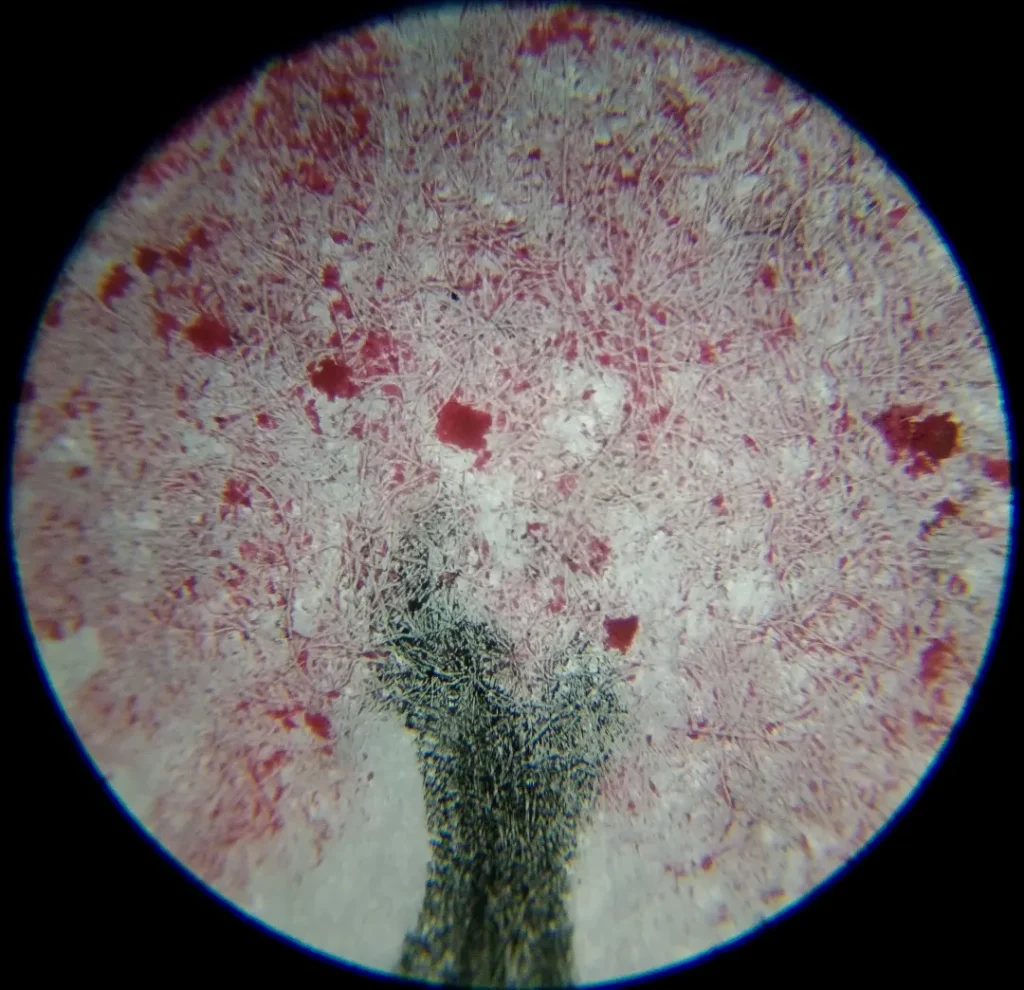
Drawing an image small enough to fit under a microscope is both challenging and rewarding
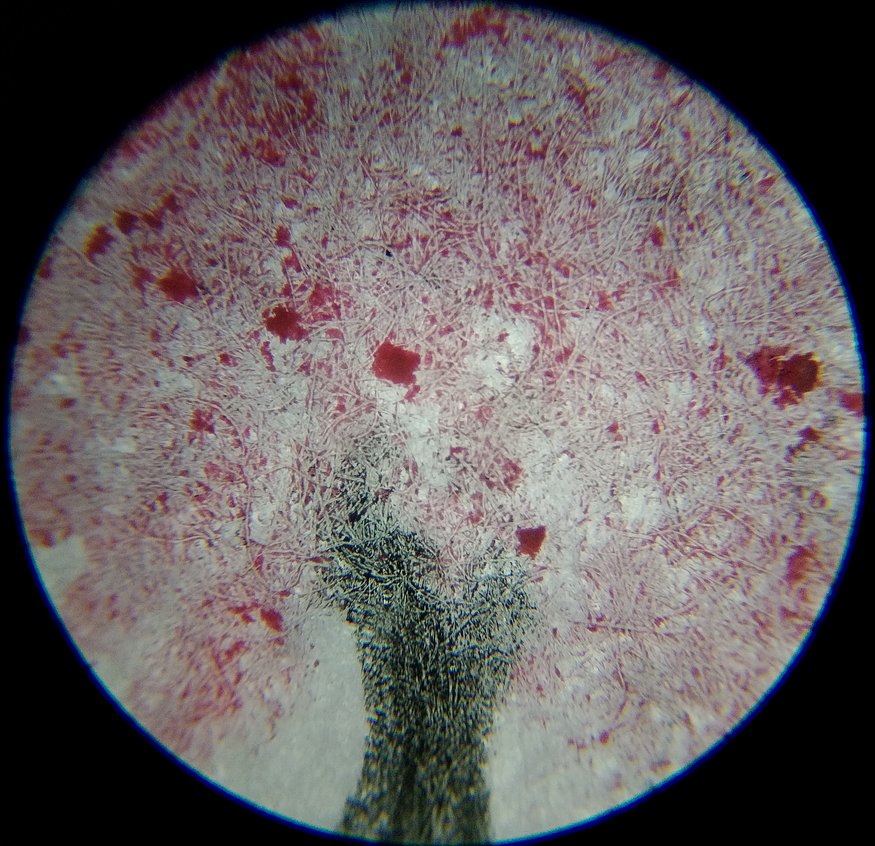
A microscopic tree (about 4 mm by 4 mm) I drew last week as part of a challenge I set myself in this article. I like it; I like how pencil strokes, texture, and color register at this scale. The chaotic patterns of the strokes themselves are complex and throw in a splash of richness to the drawing.
The drawing process itself was quite different from the usual procedure, and it was interesting enough that I thought I would walk you through my very first experience with microscopic art.
The Space
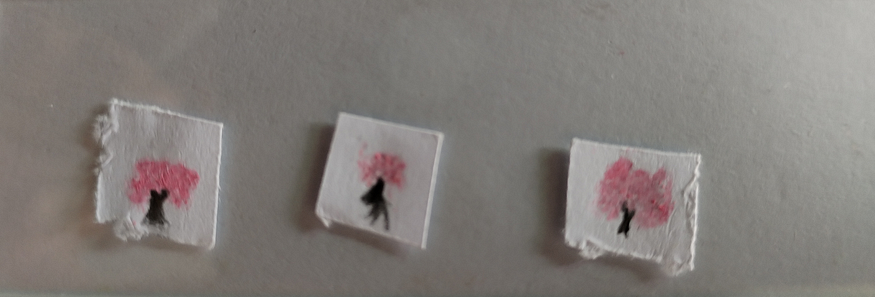
Before I start, don’t let me fool you into thinking I can draw worth a damn; but I like drawing trees, it’s a fascination. Whenever I’m bored in a lecture or have nothing to do, I squiggle in a generic tree in any space I can find, much to my classmate’s vexation, in fact, because often the empty space is in their copies.
A fun part about drawing trees is that you can sketch one of any size, as long as you’re patient to fill it all in (which I often am not); however, under a microscope, that changes. Space is of the essence.
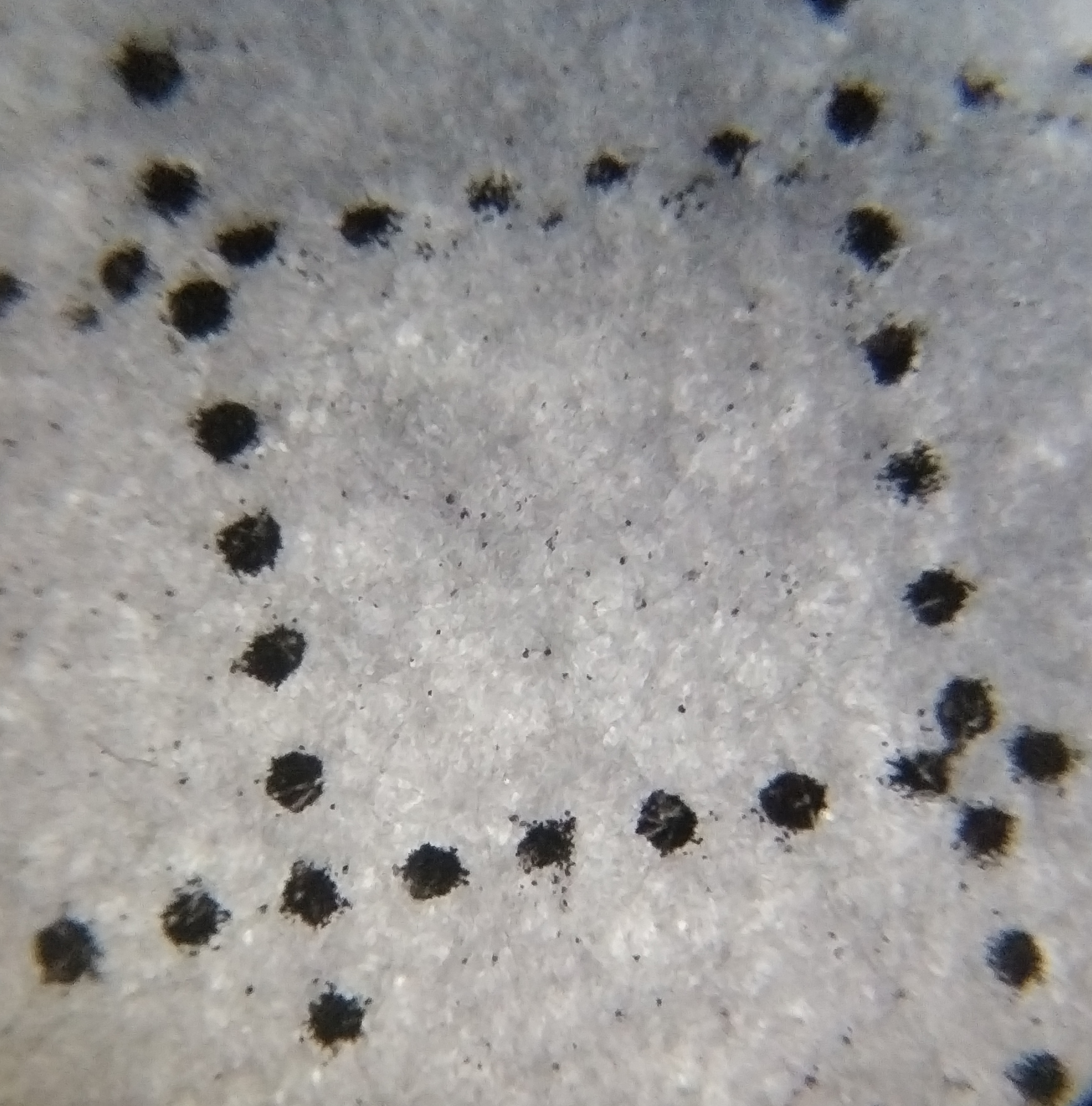
To view the whole tree under the microscope, I had to fit it into a space as small as the smallest squares on a centimeter-based graph paper. This is the widest view my microscope offers, at a 10x eyepiece and 4x objective lens, a total of 40x magnification. Of course, you can do further with the eyepiece (16x) or objectives (10x and onwards), and that’ll restrict the field of view even further.
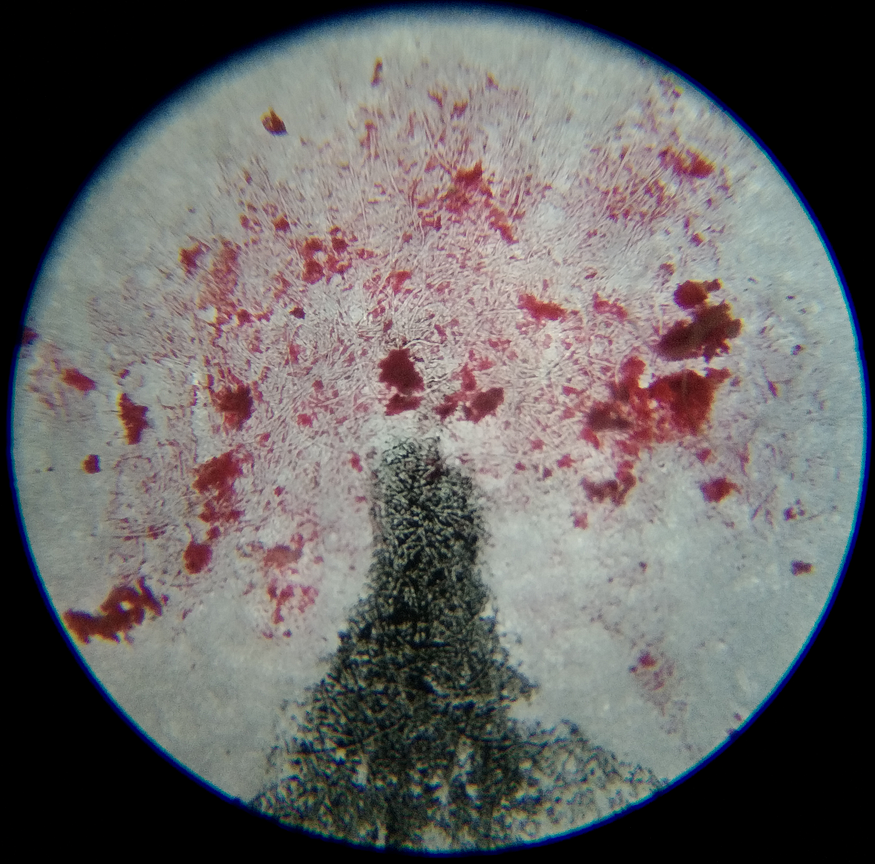
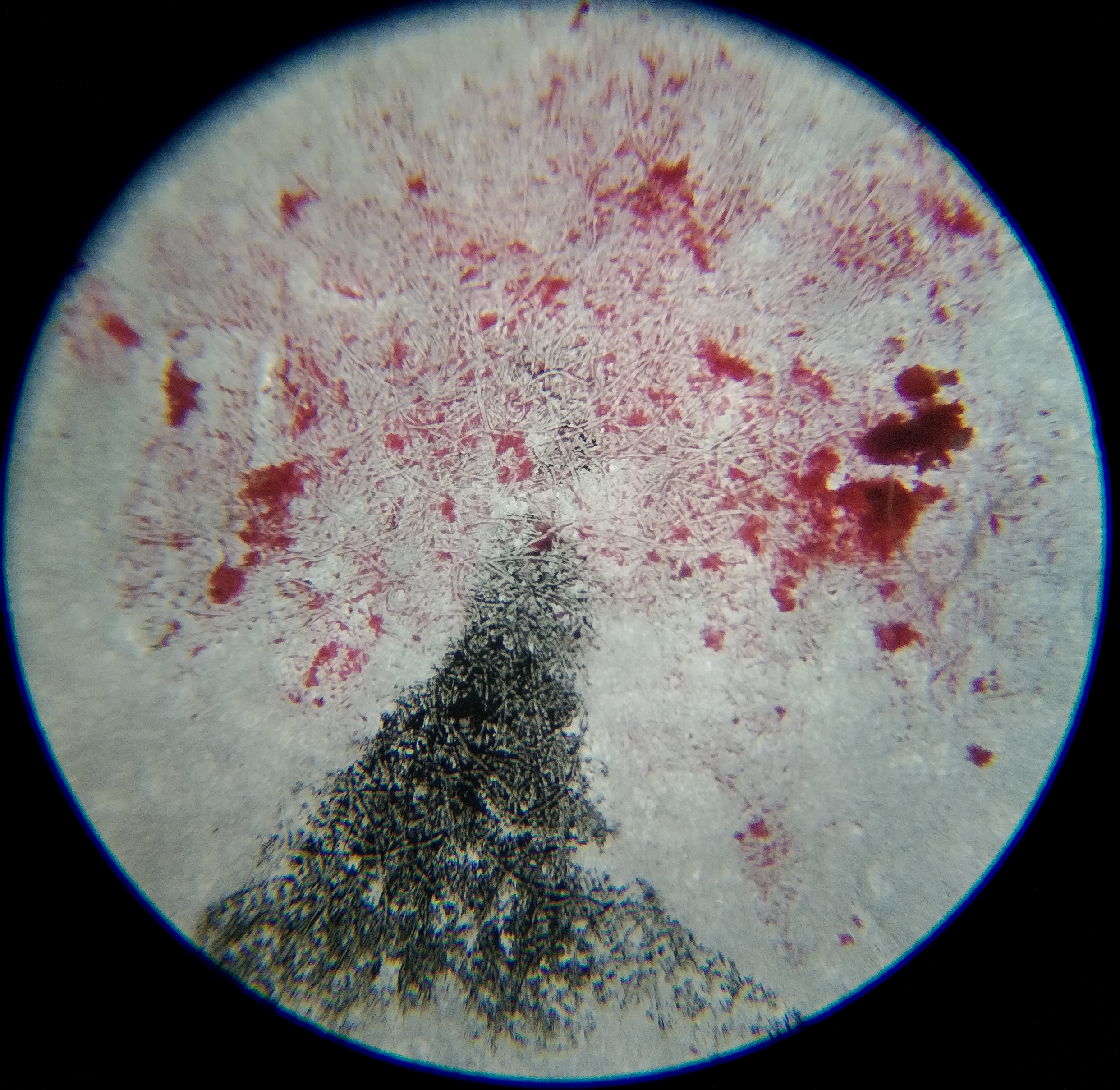
The tricky part was the trunk. It had to be thin in comparison to the foliage above, but curvy and shapely enough to be as close to a proper trunk as possible. It also had to be dark, due to reasons explained later, but darkening it ran the risk of smudging or accidentally going over the line (the middle picture in the macro-comparison).
That would be fine in macro, since whenever I did go out of line in my friend’s important lecture notes, I’d just double down and make the whole trunk and tree bigger. No chance of that here.
The foliage is easy. It is made by dotting or lightly circling a pencil (colored pencil, in this case) carefully in that space. Since I left the outline of the leaves out of the frame — for that ‘extends out of the frame’ effect — I had more leeway to work with it than I initially imagined.
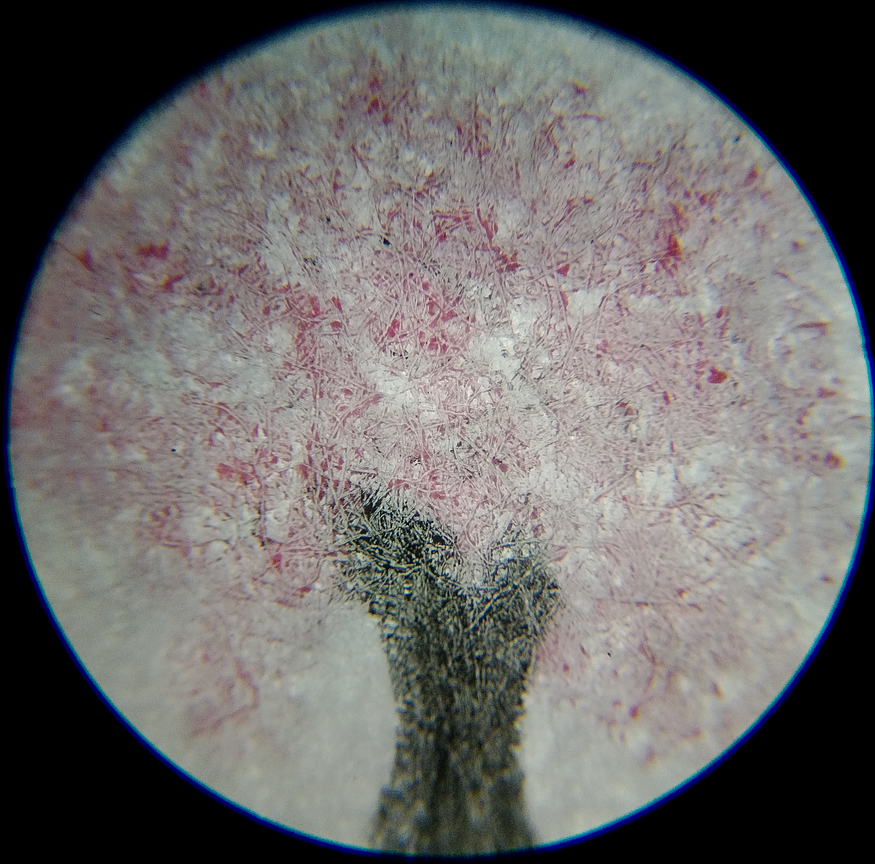
In fact, in some of my first attempts, the foliage was not spread out enough, and I had to go back and fill in more space. 10 mm² is apparently a lot. Again, the fact that I left the leaves extend beyond the frame helped; otherwise, I’d have to have been very careful about where I drew the margins.
Color
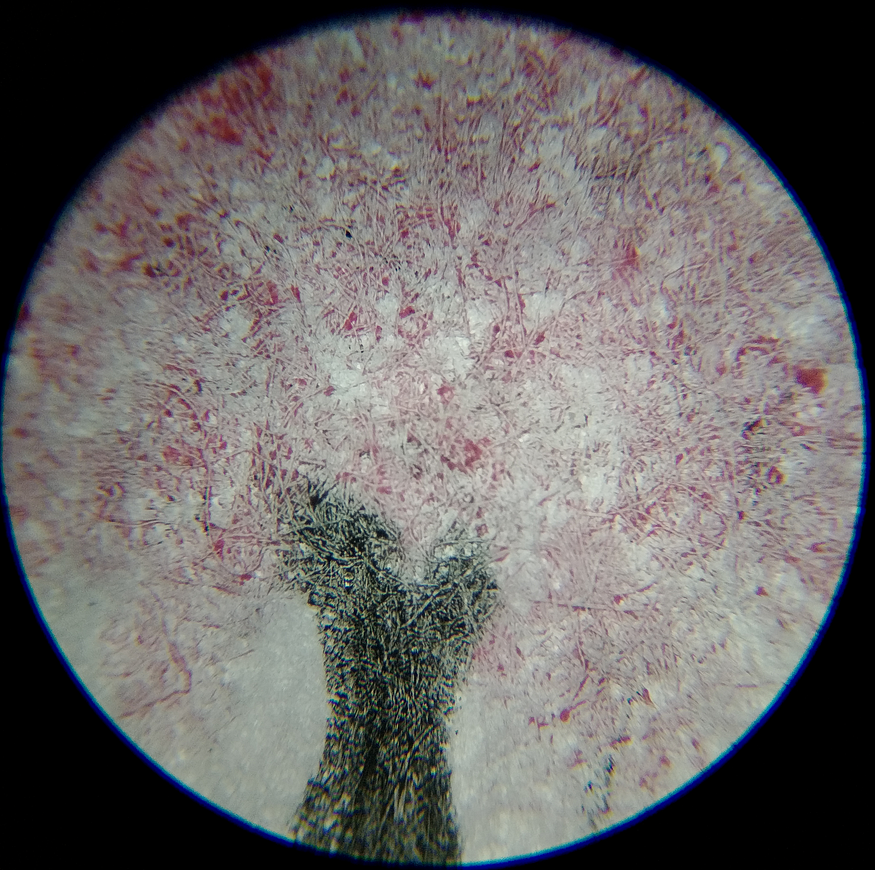
This was interesting. One of the recurring problems I faced with the image when I put each trial under the microscope —
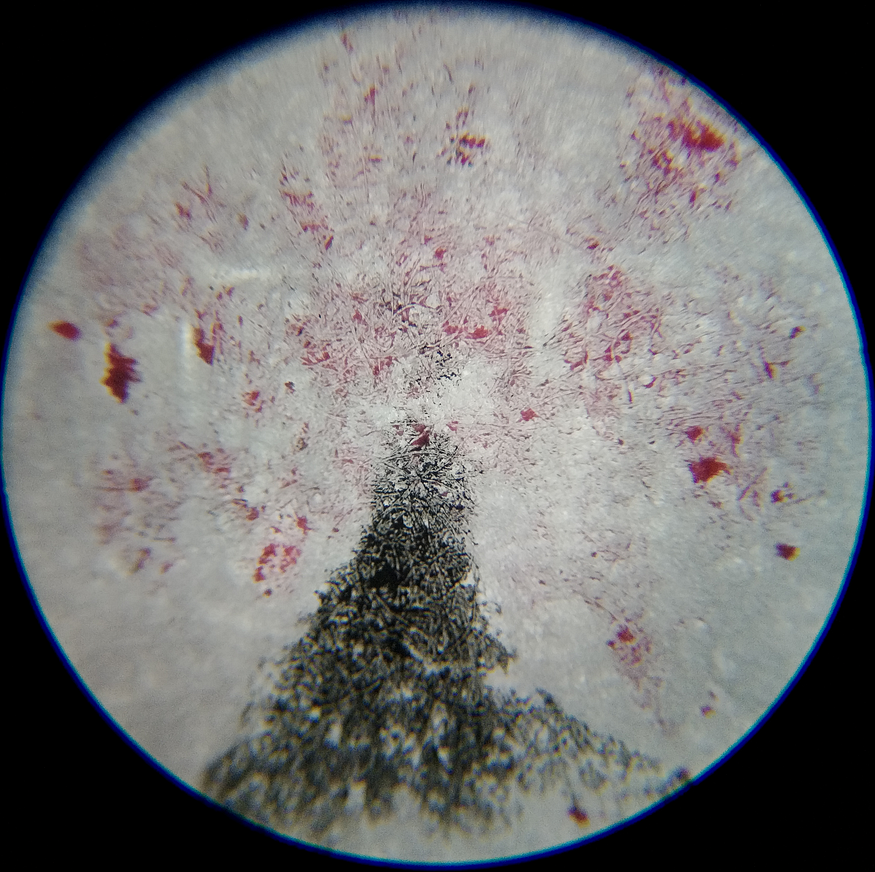
— was that the colors were not dark enough. This is understandable. At the microscopic level, the small gaps and inconsistencies within the stroke are more visible, and even seemingly solid lines appear broken. Which is probably why the tree looked a lot less lively and colorful under the microscope.
To fix this issue, I had to repeatedly go back and make the lines thicker. This was manageable for the trunk, though risky, but trickier for the foliage. These types of trees look good when the leaves have all been diligently dotted in or consistently squiggled over in the same pattern. If I bluntly rubbed my colored pencil over the paper, it would destroy the ambience I was aiming for.
Instead, I tried two techniques.
The first one I had gleaned from a girl in junior school. If you wet the tip of your pencil, the strokes were deeper, had more spread, and set more permanently — a crayon-paintbrush hybrid.

This technique worked, but left more to be desired. So I went back to good old-fashioned keep-dotting-the-pencil-on-the-leaves-technique.
I kept swiftly dotting the leaves, knowing that each strike made it at least incrementally darker. It would’ve been tedious work if the tree hadn’t been so small. This yielded the desired result.
Next, I plan on going smaller, but that’s not easy. The next magnification with this lens is 100x, and that is much smaller than 40x. I could try the 16x/4x combo [64x], but the 16x eyepiece has a very small field of view, and I can’t say which will be better.
Either way, delightful experiment, and much thanks to Bop for answering the question correctly. Keep a lookout for more drawings. Hopefully.
All images were viewed with an optical light microscope at 40x total magnification. Images taken with a midrange phone camera, cropped, and adjusted.
For more wonderful images, feel free to browse my Medium Profile.